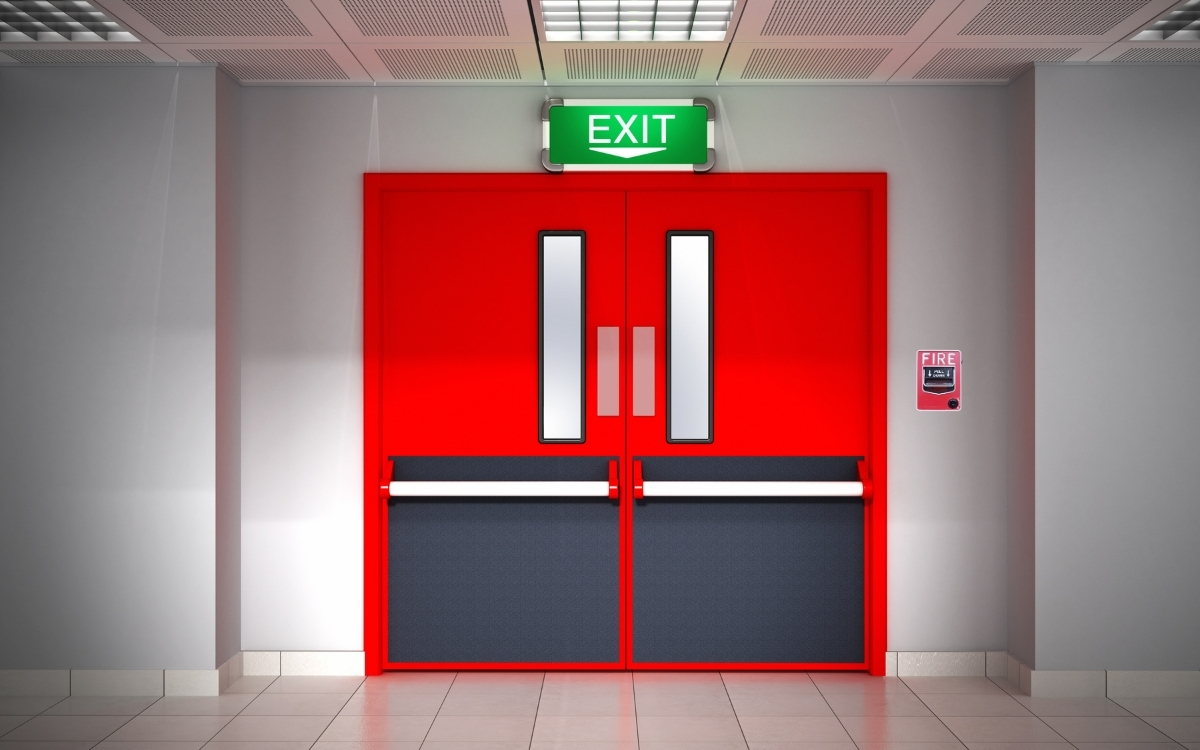
Certified Safety
The fact that even seconds are of vital importance in case of fire is indisputable. One of the most critical elements protecting people's life safety in such a situation is fire doors produced and certified in correct standards. Fire doors act as a vital barrier preventing the spread of flames, intense heat, and toxic smoke, not just a transition element. Therefore, complying with fire regulations is not only a legal obligation but also a conscientious responsibility.
Unfortunately, there are uncertified and low-quality products in the market sold under the name of "fire door" but have not passed the necessary tests. Such doors cannot fulfill their duty in a real fire and may lead to irreversible consequences. For this reason, it is essential that the preferred fire door has internationally valid certificates. Our products have been tested by independent accredited organizations and documented with EI60 and EI120 certificates.
What Do EI60, EI90, EI120 Codes Mean?
EI codes, which we frequently see in fire doors, express the performance of the door against fire with scientific and measurable criteria. Here, E (Integrity) indicates how long the door prevents the passage of flames and hot gases. I (Insulation) expresses the door's ability not to transmit the high heat on the fire side to the other side.
For example, a fire door with EI60 certificate does not allow flame passage and prevents the temperature on the opposite surface from reaching dangerous levels for at least 60 minutes. EI90 shows that this time increases to 90 minutes, and EI120 to exactly 120 minutes. That is, an EI120 certified door traps the fire in its area for 2 hours, gaining vital time for evacuation and intervention.
These durations are critically important especially in areas with heavy human traffic such as high-rise buildings, hospitals, hotels, shopping malls, and industrial facilities. The correct certificate selection should be made according to the building's purpose of use and risk analysis.
Panic Bar and Intumescent Seal
The safety of fire doors is not limited only to sheet thickness or certificate. The hardware used on the door is also an integral part of the system. Considering the fact that people will be in panic in case of fire, it is mandatory that doors can be opened easily from the inside. At this point, panic bar systems come into play.
The panic bar ensures that the lock opens in a single move when pressure is applied towards the door. It does not require a key, lock knowledge, or special strength. This feature is indispensable for rapid and safe evacuation in crowded areas. A fire door without a panic bar poses a serious security risk in case of fire.
In addition, intumescent seals (heat-expanding seals) used in fire doors undertake an extremely critical task. These seals, which look like a thin strip under normal conditions, swell by expanding several times their volume when exposed to high heat. In this way, they fill all the gaps between the door and the frame and prevent especially toxic smoke from leaking into other areas. It should not be forgotten that a large part of the loss of life in fires is caused by smoke, not flames.
In conclusion, a certified fire door should be evaluated as a whole with correct sheet structure, EI class certification, panic bar system, and intumescent seals. The lack of any of these elements weakens the security chain of the door. Real security is possible with documented performance and correct engineering details.