Managing Human Psychology in a Moment of Chaos
Imagine those first ten seconds when the fire alarm goes off in a shopping mall, on a vast educational campus, or in a hospital operating around the clock. Reason, logic, and calm give way entirely to the survival instinct, to pure panic. Hundreds of people, amid pitch darkness and suffocating smoke, begin rushing toward the emergency stairwells all at once. If you place a standard door in front of that crowd, one that is locked, requires a handle to be turned, or opens inward, that door becomes not an exit but the very source of disaster. The crush of people presses against the door, those at the front are crushed, and the door can never be opened. As Işıldak Çelik Kapı engineers, when we design a Fire Door we do not merely bend fire-resistant metal; we build systems that manage human mechanics and evacuation speed during moments of mass panic.
The Flawless Physics of the Panic Bar (Push-Bar) Mechanism
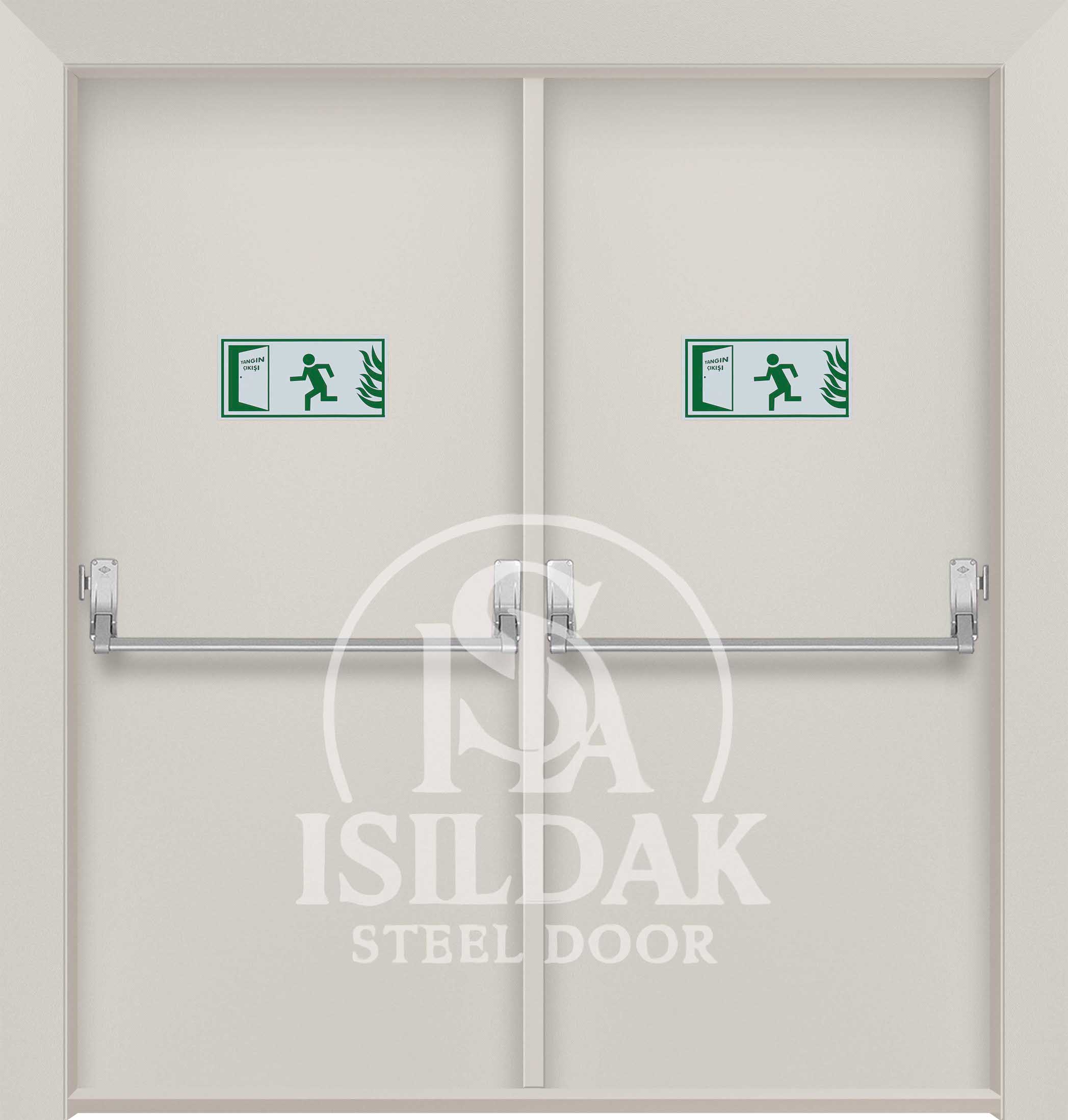
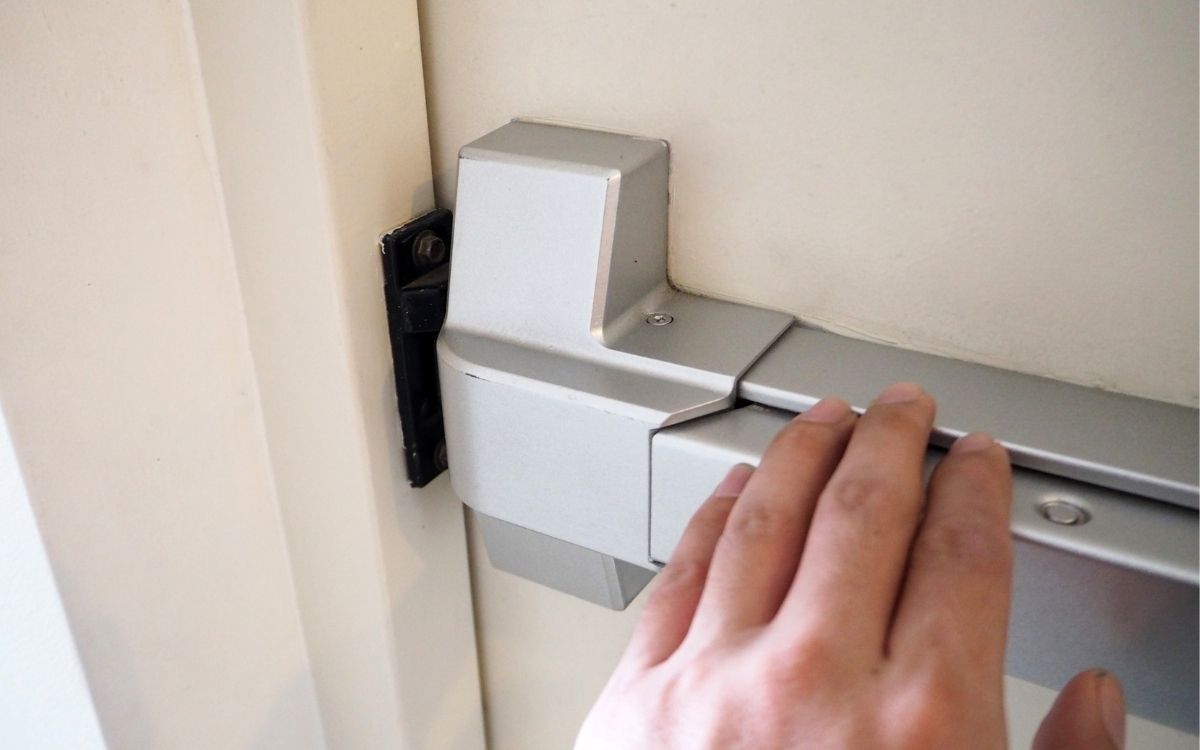
Using standard door handles on the escape routes of public spaces is a crime, both legally and morally. The logic of our panic-bar fire doors is this: in an environment where you cannot see your hand in front of your face, the very instant the body weight of people rushing toward the door makes contact with the horizontal red bar (the panic bar), every locking bolt inside the door is released. Even if your hands are full, even if the crowd behind you pushes you against the door, that pushing force alone swings the door wide open toward the outside (the escape direction). These doors, locked and inaccessible from the outside, instantly convert that uncontrolled force coming from inside into an escape reflex.
The Enemy Deadlier Than Flames: Cold and Hot Smoke
Statistics prove that more than 80% of the casualties in fire disasters result not from direct contact with flames, but from inhaling toxic gases such as carbon monoxide and cyanide (smoke poisoning). For this reason, a certified fire door must stop not only fire but smoke as well. Two different seal technologies work within the frames of the doors we produce. The first is standard EPDM rubber seals; these prevent the "cold smoke" of a fire's opening moments from seeping into the corridor or stairwell. The second, and most important, is the "Intumescent" seal. When the temperature exceeds 150 degrees, these special seals undergo a chemical reaction and swell up to 20 times their volume. They seal those millimetric gaps between the door frame and the leaf as if concrete had been poured into them. The only guarantee that people who have managed to escape to the fire stairwell can breathe clean air and leave the building is this thin chemical strip concealed in the door frame. For projects that leave nothing to chance and rely on certified solutions that have passed international endurance tests (EN 1634-1), you have come to the right place.